
It begins with a pin.
Not a metal pin with a sharp point, but a digital pin: A single image lifted from an endless Pinterest feed. A flower is caught somehow in the weave of a piece of Calico, a hammer sits idly by. A perfect print, so vivid and naïve, and I am hooked. I read more.
It is April 2017. I am scanning Pinterest for inspiration, things to amuse my smallfolk over Easter and this is it. I have a daughter who likes pretty fabric and a son who likes to bang things, so I delve deeper and learn that all that is required is a bunch of flowers, a scrap of fabric and a hammer. I decide to try it myself, in my studio, where I usually forge silver. I take a flower from the garden place it carefully between the fold of the white cotton, see how it bulges and read its hidden outline with my fingers. I take a silversmithing hammer and raise it, then moving my fingers slightly, start to pound and pound at the cloth.
The stain begins to bleed, unevenly at first, then I begin to see the exact replica of a pansy forming. Teasing out the edges of the flower, I marvel at the detail; the unmistakable black eyelashes sweeping out of the stamen, the subtle changes of shade. Hostage to the act, overwhelmed by the scent and the immediacy of the process, I strike and strike, faster and faster until the lump, that was once the living flower, is paper thin.
Lifting the cotton cloth what I see is alchemy: a colourless crepe ghost of a flower bound in places to the fibre of the cloth. Peeling it away, feeling it fall apart in my hands, I am left gazing transfixed at what is left behind. A perfectly formed double imprint, startling as a botanical watercolour. I have done it in seconds. It is a Flowerghost.

For two summers my head was filled with these prints. I bought rolls of calico, learnt about mordanting and read papers in the balmy twilight about fugitive dyes. There were droughts in East Anglia. The sun split the brown earth into crazy fragments, the tarmac melted, and the long absence of rain meant the sea was the only constant water, waves still nibbling the crumbling edge of our county. Lost daily in the dry rustle of the hedgerows I worked and worked to master this strange archaic Japanese art.
During this time memories of other summer days – childhood days – rose and seeped into the present. The children would return from school, their laughter and feet circling the garden, not knowing as they picked up whatever was strewn in my wake, that I had spent the day in another world, one near to theirs, but not: an organic place where frequencies were tuned so perfectly, each nerve was unbearably strung with signals from nature that were so resonant, I decided that to stay there too long would surely be to disappear.
Every compulsive collector, every passionate explorer knows that once they begin, once they fall into something they believe in, they cannot stop until they are in possession of everything about it. A restrained sample will not suffice and only an exhaustive accumulation will satisfy the urge to explore whatever it is that has caught their eye and fixed their mind. Not until every flower encountered in my small ecosystem (measuring six miles walk from my house through the woods and fields) had been printed and the strength of the dye recorded over time, would I be able to cease this strange appropriation of nature and move on to a different beginning.
The Flowerghost: it is small, like the hazelnut held in the hand of the medieval anchorite Julian of Norwich, but was for a time, “everything there is”.
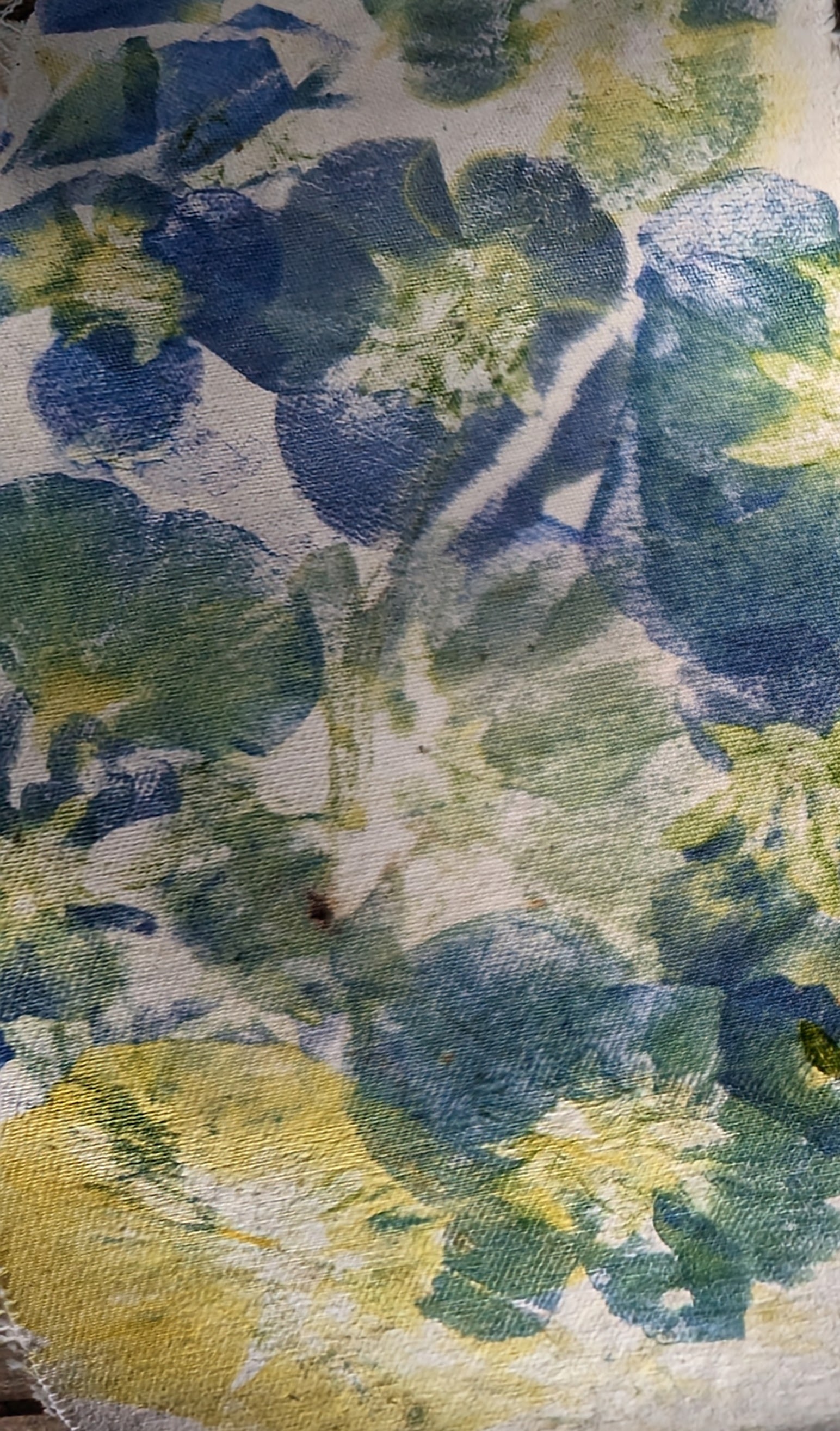

 Restless Rose Vintage